
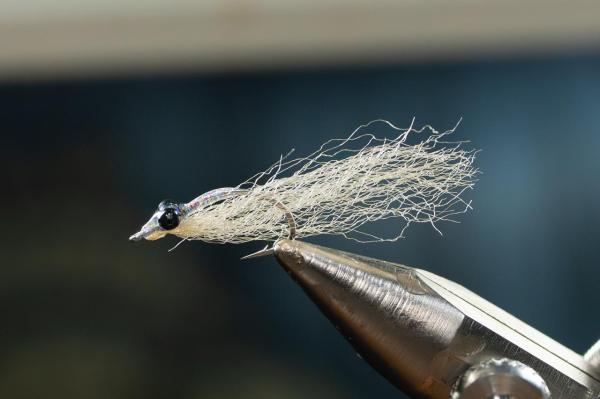
Introduction:
If you wade across the shallow sand banks in the Garden Route you will see small gobies darting away from under your feet, only to fall back to the sand and repeat the process when you advance. Stand still and they might even come and nibble your toes – very cute little buggers!
I was convinced that the Spotted Grunter feed on these Knysna Sand Gobies (Psammogobius knysnaensis) and that if one could create a fly to imitate them, and more importantly fish it in a similar way to the darting gobies, you may be able to fool the odd Grunter.
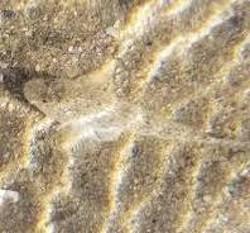
Fig 1. A well camouflaged Knysna Sand Goby.
These gobies are basically a speckled tan on top, white underneath and have 2 small black eyes. Being a lazy fly tier, my first attempt was basically a cross between a small tan Clouser and a Crazy Charlie, just to try and get the colour right, with a bit of weight (small dumbbell eyes) so that the darting and settling back on the sand motion could be tested. The original version had super small black bead-chain eyes to be fished in very skinny water. Following extensive testing, under differing conditions, I now tie the fly in 3 weights, namely: Super small black bead-chain eyes for very skinny water, black medium brass bead-chain eyes as an all-round option and the smallest black tungsten dumbbell eyes I can find for deeper areas and/or in areas with faster currents.
The effectiveness of this first version exceeded all expectations and soon my fishing buddies started asking for samples of “Niel’s Goby Fly” to “test” and the name kind of just stuck. But, as said before, it is really only a cross between a tan Clouser and a Crazy Charlie thingy. That said, I am happy with their proposed name, and I am convinced that, if fished correctly, it will bring success to you. For me it has taken many Spotted Grunter, White Steenbras, juvenile Garrick, Cape Stumpnose, Bartail Flatheads, Blacktail, many Southern Mullets etc. But, of course, the most important target species for this fly is sight-fished Spotted Grunter (Pomadasys commersonnii) and thus the later name change to “Niel’s Grunter Goby Fly”, or just “A Goby Fly” for short. If you don’t know it yet, Grunter can be very finicky and are some days extremely difficult to catch. Despite this, dozens of Spotted Grunter have been caught by Marius Rousseau and me since we started using this fly and variations thereof. Like any fly, it is not a magical fly that will always bring you success, but rather a very easy to tie fly that is worth having in your box, or in my case, on my hat! As time goes by, I am sure people will start tying more realistic versions of goby flies that may, or may not, be more effective. However, in the meantime you can try this easy version that can be cranked out very quickly – especially if paired with a nice red wine.
Materials:
Tying instructions:
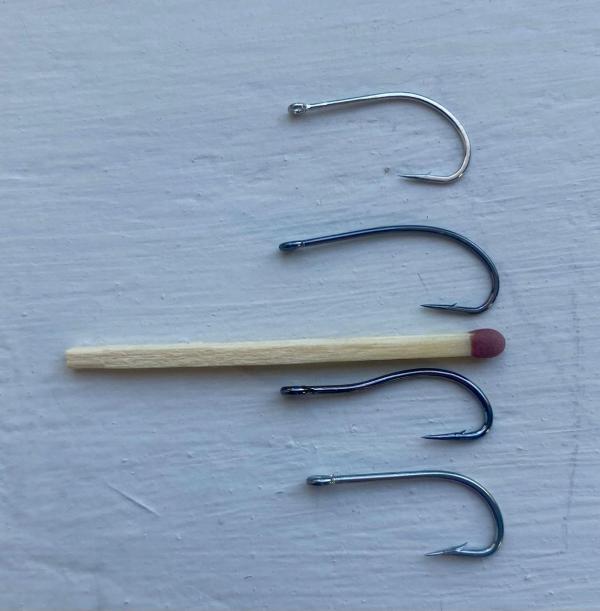
My preferred hook for Spotted Grunter is a Gamakatsu SC15 #4, and sometimes in #6. That said I also tie some of my Goby Flies in #6 and even #8 to fool Mullet. Note: the Gamakatsu SC 15 is quite a small hook and quite difficult to source at the moment and you may have to try other hooks. Options are: Partridge Saltwater shrimp #8, Ahrex NS150 Curved Shrimp #10 or Mustard 34007 #6 or similar, but keep on searching for the Gamakatsu SC15 #4 and #6 – they are thin, very sharp and very strong.
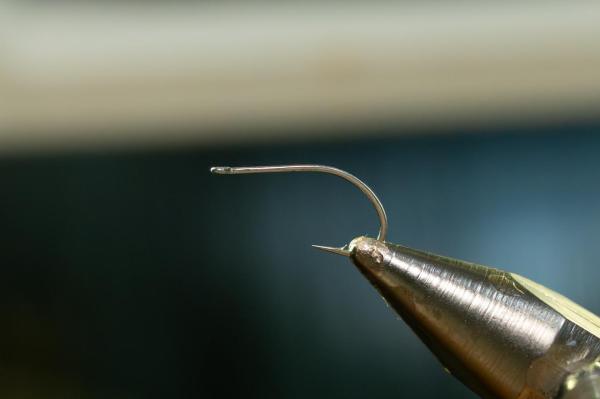
Fig 1. Insert Gamakatsu SC15 #4 hook into vice.
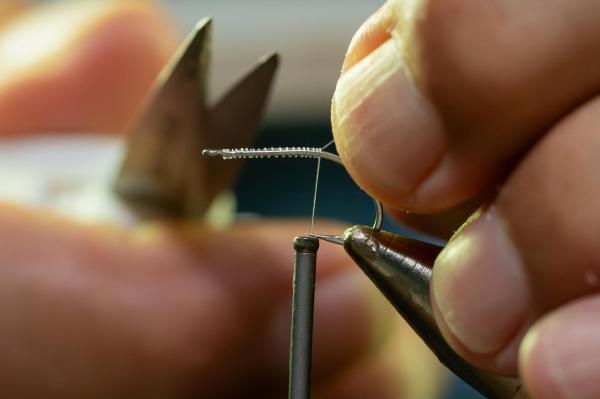
Fig 2. Cover hook shank with super thin nylon thread.

Fig 3. Tie in your preferred dumbbell option (see text above).
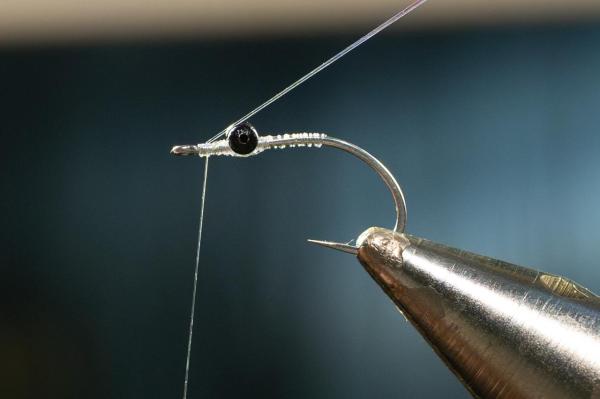
Fig 4. Tie in your preferred flash (Pearl Flashabou or UV flash).
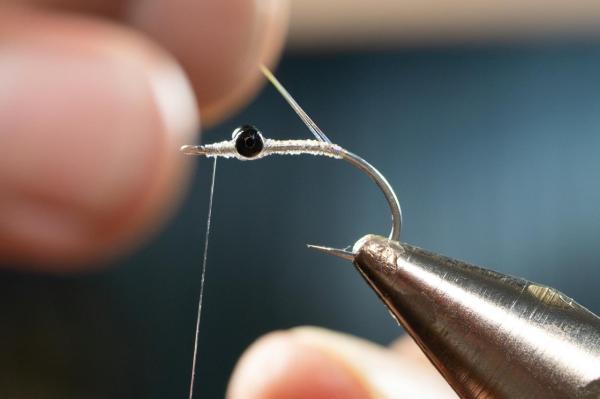
Fig 5. Wrap flash around the hook shank and also around the dumbbell eyes.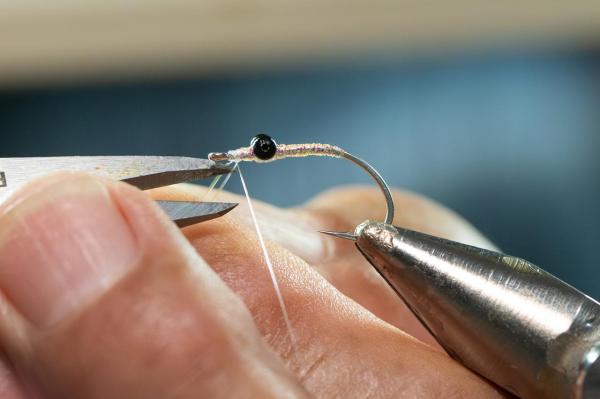
Fig 6. Cover flash with clear nylon thread for added protection.

Fig 7. Cover with UV glue or several layers of Sally Hansen Hard as Nails. This really makes the belly section “pop”.

Fig 8. Set UV glue with UV torch.

Fig 9. Flip hook over. Grab a thin bundle of tan Sculpting Fibre (about 5 times the length of the hook shank) to be tied in next.

Fig 10. Wrap the middle of the sculpting fibre around the tying thread as this helps to position the sculpting fibre easily.
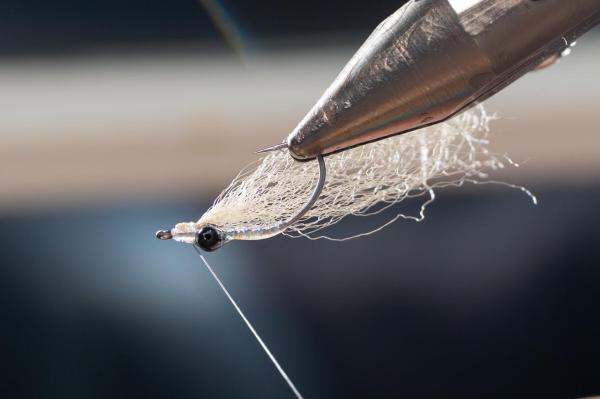
Fig 11. Tie down.
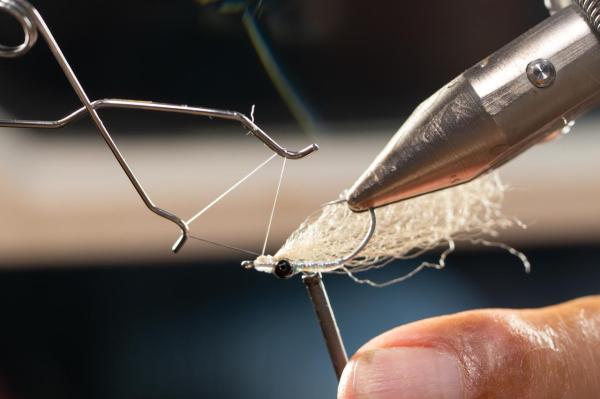
Fig 12. Whip finish and trim the fibres to 2 to 2.5 times the hook shank length. (For the smaller flies used for Mullet keep the wing short otherwise they will nip the back of the fly without hooking up). Taper the fly slightly towards the back to ensure it has a nice fishy shape.
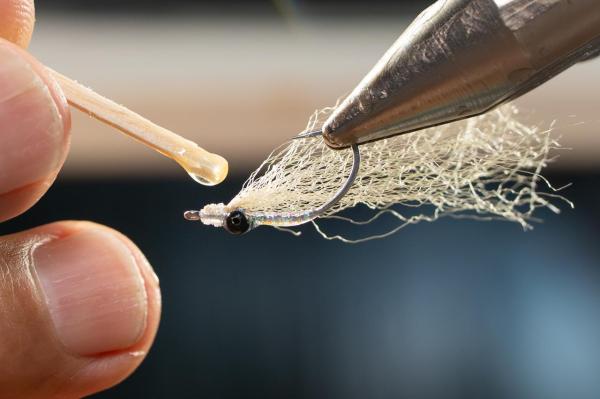
Fig 13. Cover the tie off position with UV glue (or Sally Hansen Hard as Nails).

Fig 14. Use a feather to make sure there is no UV Glue in the hook eye.
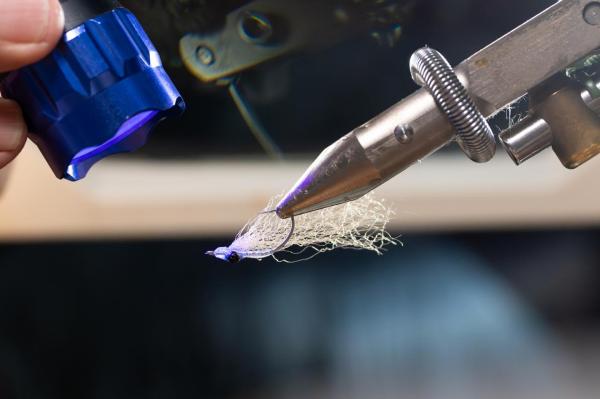
Fig 15. Set the UV Glue with a UV torch.
Fig 16. The final fly – a Tan Sculpting Fibre Clouser, but you may hear my friends calling it “Niel’s Grunter Goby Fly”. Whatever.
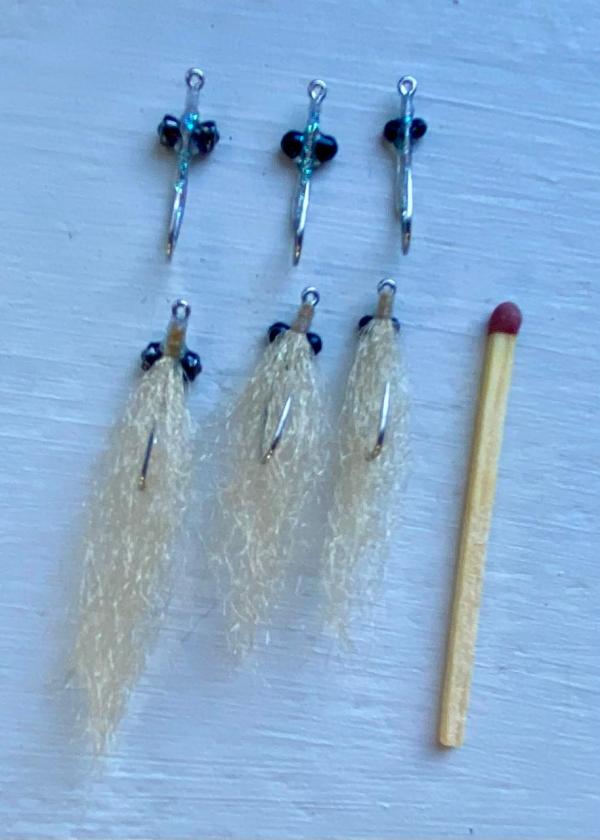
Fig 17. Size of the fly.
I know you will give me a hard time for calling this little tan Clouser “Niel’s Grunter Goby Fly”, but I also know that you will thank me when you start fishing this little fly. It has caught many, many fish and I urge you to fish it with confidence.
For more info on sight-fishing for Spotted Grunter, and how to strip the fly etc. see also https://www.fosaf.org.za/read-FOTM-473.php (Die Spookvlieg).
Now go and fish - Stywe lyne!
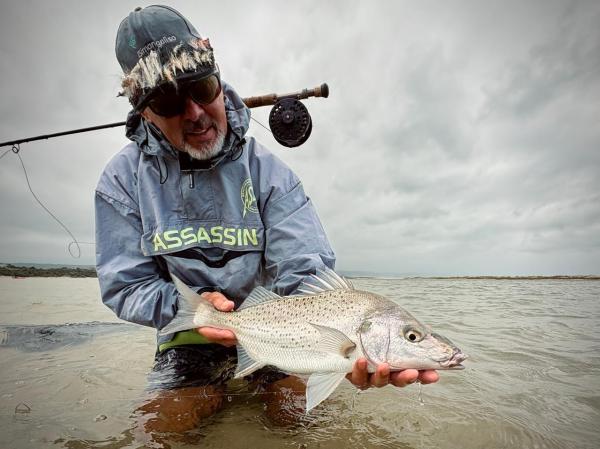
Fig 18. Another Spotted Grunter that couldn’t resist the little Goby Fly.
Photo Credits:
Hano Scholtz – www.wildcomedia.co.za
Return to News

