
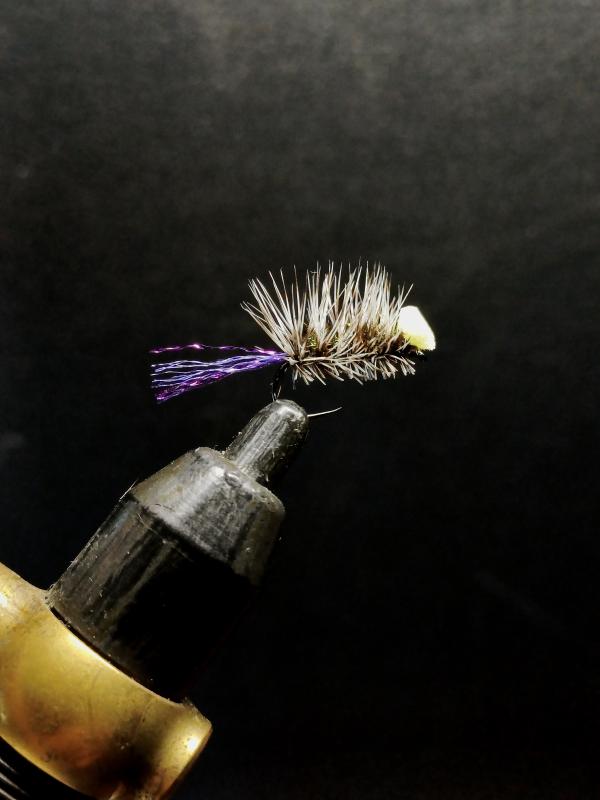
I find that flies are a little like fashion trends. In the same way flies that I once fished with using largely natural materials, have been replaced with new patterns incorporating a mix of natural and a lot of synthetic materials. Popularity of flies can come and go. Every now and then someone claims to have discovered the proverbial ‘silver bullet’. For a while they may reign supreme until something new does its rounds and the oldie is relegated to a dark corner of the fly box. The Griffith’s Gnat is one that had its day, but few use it now or have even heard of it and yet its fish fooling attributes are as good if not better than many of the modern-day flies. I still use it in the right conditions but have added my own twist to the original incorporating features that I feel improve the triggers, balance and floating position.
If you enjoy small streams give this one a try. In fact, it should be a staple in every trout angler's fly box. The original was named after George Griffith, one of the founders of Trout Unlimited in the USA. It is a versatile dry fly designed to mimic a cluster of midges on the water's surface, but I think in our local conditions it also contains the right elements of a generic bug and something looking up from the trout’s view is familiar and perhaps something that its tasted before.
The beauty of this fly lies in its tying simplicity.
Materials.
Hook: A standard wide gape dry fly hook similar to the Grip 11011BL (I prefer this variant in sizes #14 and #16).
Thread: Black
Tail: A few strands of DMC 4012 embroidery thread (Polypropylene or organza are also ok)
Body: A round rod of foam as shown in the photographs.
Over-Body: Peacock Herl.
Hackle: Grizzly or any suitable light coloured hackle feather.
Tying Instructions
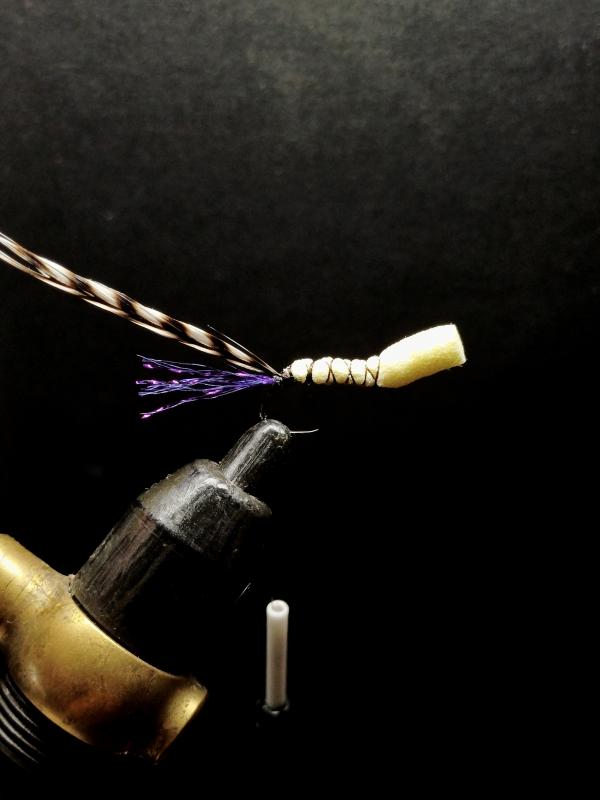
5. Tie in two strands of peacock herl in front of the hackle feather
6. Wrap the herl forward to just behind the eye to create a fuzzy green body and secure it. (As shown in the photograph below that incorporates tying steps 5 and 6)
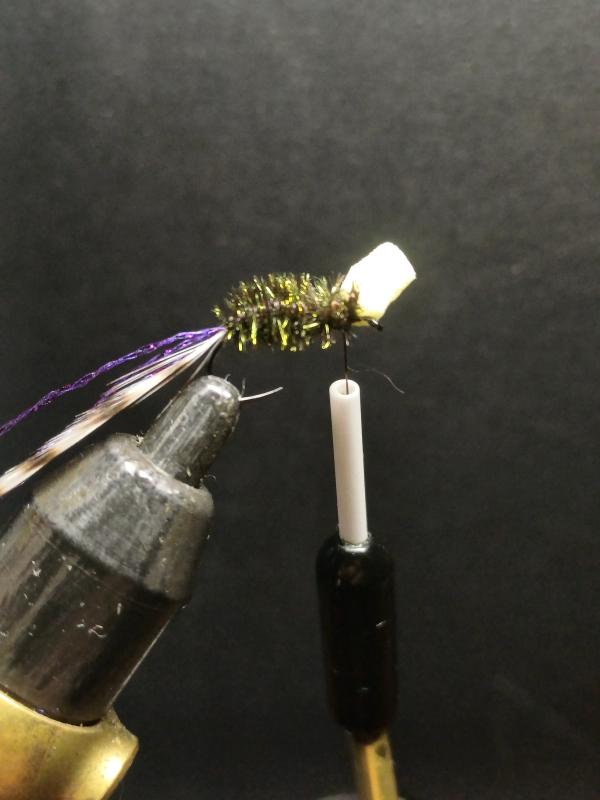
7. Palmer the hackle forward over the peacock herl body in equal close turns and secure it behind the foam and trim the excess.
8. Build up a dam of thread between the foam and hook eye to force the post into an upright position and whip finish. (As shown in photograph below that incorporates tying steps 7and 8).
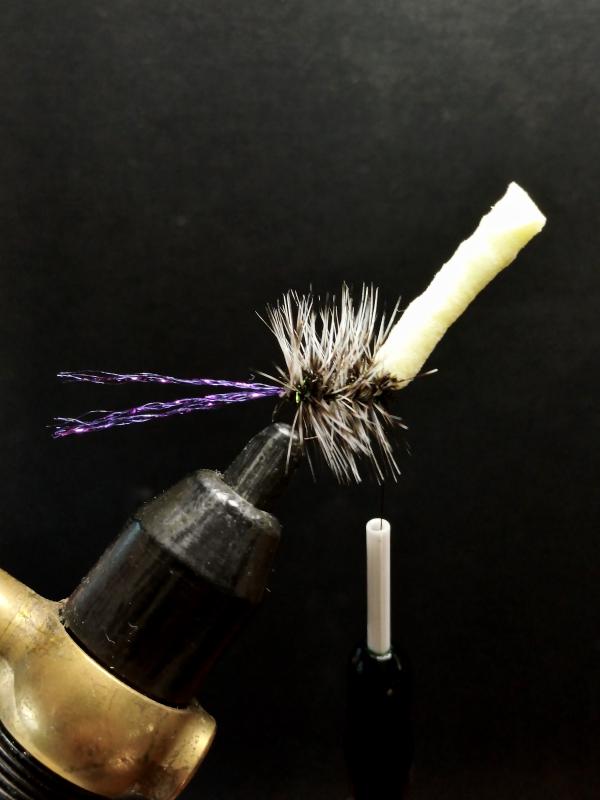
9. To complete the tying, trim the tail to about shank length and trim the foam post as shown in the photograph. The length can be your own choice for visibility, but not too long to upset balance. It is optional, but I also trim the hackle fibres below the shank to about half the gape width. I find this helps to get the fly to sit on the water surface where the foam will do its job assisting with the buoyancy. The trimmed fibres penetrate the surface film giving the appearance of legs (the final Griffiths Gnat variation is shown in the photograph below)
Fishing the Griffith's Gnat
The Griffith's Gnat is most effective when trout are "dimpling" the surface but ignoring larger, more obvious dry flies. It excels in slow-moving water and calm areas of the tailwaters, The changes introduced in this variant make the fly far more robust in the varied conditions experienced in the rough and tumble of freestone streams and of course the foam sighter makes it much easier to see than the original. A drop of floatant helps with buoyancy.
The original was primarily used to represent midge clusters, but its buggy appearance also makes it a successful attractor for small mayflies, ants, or even micro-caddis.
Use a delicate cast and a dead drift.
Peter Brigg
May 2026
Return to News

