
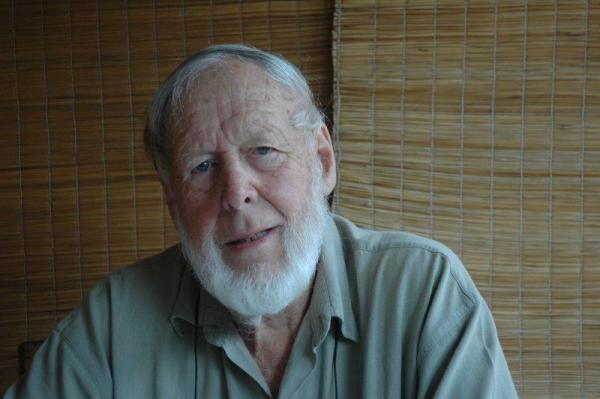
Dr William Robert “Bill” Bainbridge, a South African-born biodiversity conservation management and planning and forestry expert, built a distinguished career in biodiversity conservation, protected-area management and wilderness advocacy.
He turned 98 on 4 November 2026.
Bill was educated at Glenwood High School in Durban and went on to earn a B.Sc. in Forestry from the University of Stellenbosch. This solid grounding in forestry shaped his lifelong professional focus on indigenous forests, ecosystems and the careful management of natural landscapes.
Bill’s conservation work spanned Zambia and South Africa. In Zambia, he served as Chief Game Officer and contributed to the elephant-management programme in the Luangwa Valley National Parks. On returning to South Africa, he headed the Conservation Unit in the Natal Branch of the Department of Forestry. He later worked with the former Natal Parks Board and as a conservation and resource-management consultant.
At the Department of Forestry, Bill helped advance the designation, proclamation and management of wilderness areas in the Drakensberg. Working with Chief Director Danie Ackermann, he also contributed to the proclamation of wilderness areas in state forest reserves in Natal, the Western Cape and the Eastern Cape. His work included improving the management of indigenous state forests, their ecosystems and protecting the biodiversity they contain. The Drakensberg wilderness areas are now part of the Maloti-Drakensberg World Heritage Site. Bill played a key role in the drafting the submission.
Wilderness conservation became a central part of Bill’s professional life. He attended numerous International Wilderness Congresses, served on their resolution committees and chaired several of them. His contributions to the international wilderness movement were recognized when he was named the congress’s “Wild Man.” He also worked with the International Wilderness Leadership Foundation and the Aldo Leopold Research Centre on successive editions of the Wilderness Management Handbook, writing material on managing wilderness areas while preserving their wilderness character. In 2008, he co-authored the South Africa chapter of the Handbook of International Wilderness Law and Policy.
After attending the Third World Wilderness Congress, Bill with others, formed and led the Wilderness Action Group, later serving as its chairman. The group made submissions to the national government on wilderness conservation management, including during the preparation of the National Environmental Management: Protected Areas Act. Its advocacy helped secure provision for wilderness areas in the legislation.
Bill also helped develop and deliver wilderness-management training courses, initially in collaboration with the United States Forest Service and later with the University of Natal, now the University of KwaZulu-Natal. The courses trained participants across South Africa, including in KwaZulu-Natal, the Western and Eastern Cape, Gauteng and Limpopo, as well as in Namibia and Zimbabwe.
His conservation interests extended to freshwater ecosystems and recreational fishing. An active member of the Federation of Southern African Flyfishers (FOSAF), Bill served on its executive committee and chaired its Environmental Committee. He reviewed and updated the organization’s policies and guidelines on the sustainable management and conservation of freshwater fisheries, and liaised with the Natal Parks Board and its successor, Ezemvelo KZN Wildlife, on fisheries policy and management. He also wrote about fly-fishing in the Maloti-Drakensberg region, emphasizing the relationship between biodiversity conservation and the role of anglers and other user groups as partners in ecosystem and biodiversity management. He also promoted flyfishing as a major contributor to tourism and its associated economic and social benefits.
Bill worked with a range of development entities to build enterprise in many rural communities, advocating a holistic approach to sustainable development and appropriate land uses, so as to bolster much needed livelihoods in these often forgotten communities.
Bill was also an active member of the Wildlife Society of South Africa and the Game Rangers Association of Africa. He joined the latter in 1995 and served on its KwaZulu-Natal Branch Committee, sharing his experience and expertise and promoting the Association’s work. He remained a strong supporter of its aims.
His many contributions were recognised through several awards, including:
x the Wildlife Society Award in 1995;
x the FOSAF Exemplary Service Award in 2001;
x an honorary Doctor of Laws degree from the University of Natal in 2003; and
x the Game Rangers Association of Africa’s Silver Medal in 2004.
Bill was a good friend, mentor and guide to so many people and a decent human being, what in Yiddish is referred to as a mensch – a decent, honourable, upstanding human being — someone with integrity, kindness, and moral backbone. He was committed to good values both in human relations but also in relation to the earth, her ecosystems and the biodiversity we all share the planet with.
Bill had an enquiring mind and was interested in so many facets of the journey we call life. He had a passion for photography. I recall him lugging his hug telephoto lens about to capture just the right image. He also had a lifelong interest in investing. His enthusiasm was instrumental in getting a group of us to form the Rhino Investment club to learn more about such matters. We would meet regularly at his and Sheila’s home to discuss the up’s and down’s of the stock market, world affairs and enjoy a cup of something hot with Sheila’s marvellous scones.
Despite the breadth of his work, Bill was not one to promote his own achievements. Those who worked with him valued his knowledge, commitment and generosity in sharing his experience. His calm and reasoned views often made a difference in heated debates or community meetings.
His legacy and influence can be seen in the wilderness areas he helped advocate and cement in law, in the biodiversity conservation management policies and training he helped shape, and in the generations of conservation professionals and other people including many rural communities, who benefited from his guidance.
Bill was married to Sheila and they have five children: Mark, Jennifer, , Stephen, Neil and Lance.
Bill passed away peacefully in his sleep during the night of 13/14 November 2026 at his home in Howick, KZN.
The world will be poorer without his inquisitiveness, energy, presence and wisdom.
FOSAF sends heartfelt condolences to the entire Bainbridge family.
Ilan Lax
FOSAF National Chairperson.
Return to News

